“I am walking in jeweled shoes” –a Valentine’s Day poem

A-Heart10

I am walking in jeweled shoes

I am walking in jeweled shoes
the people have made them
for my feet
in joy they have made them
from the dark earth
from the blind earth
from the old earth
the earth has cooked up
red and turquoise and blue
these are her spirit dreams
from deep inside her body
and the people have gathered them
with their hands
of honey color
and love
oh the people of my village
celebrate my going
to you
they have given me
this gift
so that I may walk in beauty
and feel the earth hold me
all the way down
they are the gift for me
joy-woman
as I open my heart
to my man
and dance
in wild amazement!

you and I will not hear the jewels
of my shoes
begin to sing
as I slip them off
this one
that one
your hand helping
but they do
in high and low voices
the people have placed them
soft handed and teasing
tenderly and wise
upon my feet
we cannot hear their song
lost as we are
in our succulent beginning
our wild sacred dance
but we have been
well blessed
we have been blessed
all the way
down

© Kathleen Dunbar

photo by Kathleen Dunbar

here’s a love song to listen to from my new cd The Storm in Our Head, called Cello Song
find it on my website, too www.kathleendunbarmusic.com

How I Staged “Ivan the Terrible” for my Sixth Grade Class

1.A-Russian Hat 54 - Version 2There were two rival theater companies in my elementary school. Jill’s company put on what I considered sappy stories of heartache and love gone wrong. None of that for me, thank you. The plays I put on were always action affairs—girls blown off course by hurricanes and left to survive by their wits on wild islands, Klondike Joe’s adventures in the Yukon north, the clashes of the Greek gods. Jill and I obviously had different family dynamics going on at home.

In the sixth grade we both took it up a notch. Jill’s crew put on A Love Story, which was all the rage at the time. She had attracted the interest of the high school drama teacher and they were doing a full blown production on the stage in the gymnasium. The drama teacher thought of herself as avant garde and a cutting edge purveyor of the arts. Jill convinced the teacher to lobby the powers that be and got permission for the boy playing the lead to smoke an actual cigarette on stage to lend reality.

Now something had happened sixteen years before I showed up in the sixth grade wanting to put on a play. Some personality glitch between my brother and the drama teacher had set them at odds. At the age of eleven it was astonishing to me that anyone could remember anybody as far back as sixteen years ago. But teachers did. Along came another Dunbar kid to school. The drama teacher said, “I remember your brother,” and turned her nose up at me. The old Greeks no doubt would be speaking of the machinations of Fate at work here—I had washed up in a country where the citizens had formed opinions of me long before my birth.

Sixteen years is a long time, but I was not a “surprise” late in my parents’ marriage. They actually wanted more kids. The reason for such a hefty lag time between my brother and me was my father’s poor quality semen, weakened by his childhood diphtheria, WWII and who knows what. The doctors said another child was unlikely, though not impossible. Along I came, a “miracle.” I have always figured I arrived so late because I was holding out for more progressive times to be born into. It was helpful for me to have the backdrop of the sixties’ and seventies’ social consciousness to help balance my dad’s “women shouldn’t vote or wear pants” attitude. I never worried like some kids that I was adopted or my mom stepped out because I had both the Nelson’s lanky body and a definite resemblance to the Dunbar face. For better or worse I was in my tribe from hell.

So there were only two kids in my family, and I showed up ages later at school and the teachers still remembered my brother, Chuck, or Charley as my mother and I called him. Mostly favorably. One elderly lady gave me an A just because I was Chuck’s sister. Others wrote me off, including the drama teacher. This was all very mystifying to me; more so because I could do nothing about it. I only knew my brother by his infrequent visits home. He was a kind of far away hero for me. I thought that he loved me simply because of the fact that he didn’t yell at me. It was many years before I realized that not being yelled at by someone doesn’t necessarily equate with being loved by them. It just means that the person doesn’t yell at you. But it was pretty refreshing to not be hollered at in a house where every stick of furniture had an argument around it. I longed for someone to see me, hear my expression, and recognize my stories. Underneath, what was too painful even to consciously recognize was that I just wanted somebody to notice me, to love me and to tell me that I belonged. In truth I just wasn’t much on my brother’s radar, as he was having his own serious fallout from having been raised in the Dunbar household.

So, love stories held no appeal for young Kathleen. I opted for the grit. For my sixth grade production I wrote a script telling the story of Ivan the Terrible. Typical of a Russian tale, there were so many characters that I needed the entire class to fill the roles. There were only a few kids too shy to perform left over to watch the grand production. We needed an audience. I was persona non grata with the drama teacher, so no gym stage. I got permission from Mr. Wilson, our teacher, to stage the play for the sixth grade class next door in front of their chalk board.

Now, Jill may have had a real cigarette in her production, but I also had the real deal: I had the thrill of being able to cast an actual Russian boy as Ivan. I knew Michael, who I had cast as Ivan, was of Russian origin because he had confided to me that his father had dropped the -ovich suffix on his last name to Americanize his Russian origins. His dad felt that the patronymic smacked too much of the old country and changed their last name to fit in. His American-born son would be registered at school with the kind of name that he hoped hinted at baseball and apple pie rather than piroshkis and the gulag.

However, I knew the inside story. Michael had the magic –ovich at the end of his real name, which spoke to me of troikas, Russian wolfhounds, and Baba Yaga. All things Russian seemed very exotic to me. I later went on as a young adult to read practically every Russian author I could get my hands on. (I drew the line at reading Tolstoy’s Anna Karenina, however—I found out that she was overcome by sorrow and offed herself in the end and I didn’t need any encouragement that way). Anyway, I’d take a real Russian over a real cigarette in my play any time. My dad smoked three packs of Pall Malls a day, and smokes didn’t hold any romance for me, just a nose full of stink.

With all this old time Russian heavy winter and far north cold going on, I felt that to lend further reality to the play, we needed someone to wear some fur, some real fur. I had just the thing. I had an actual seal skin that my brother had brought me back from Alaska where he was stationed during the Viet Nam War. One of the cold war worries still around was that the Ruskies might invade us over the Bering Strait, thus a lot of young men were stationed up there in cold so intense that if you threw a boiling hot cup of coffee out into the dark night it would freeze before it hit the ground. My brother told me he had actually done this. The first Christmas that he came home with this story he gave me the seal skin. I was enthralled. Mom called the seal skin smelly, and kept trying to hide it, which of course made me prize it more highly. I took a good look around and found it up in the attic behind Dad’s old WWII GI winter coat. This coat was lined with some kind of pelt as well, but it was too smelly even for me, and in no way Russian. The seal skin was just the right prop. I thought perhaps the seal had swum over from Siberia to the Alaskan shores. Many years later I realized that the poor creature was probably a young seal clubbed to death by someone trying to make a buck off the American soldiers. The skinned remains of my seal ended draped around the shoulders of a Midwestern girl with glasses playing a Czarina. Later in the year this girl changed her allegiance, joining forces with Shelley. Shelley was the girl whom I’d cast as the beautiful young Russian princess and who gave blondes a bad name for me by hatching a plot to make Kathleen a tormented scapegoat. But the winds of Fate hadn’t blown me that particular storm yet.

The play was cumbersome to rehearse with so many actors, but we managed. I was too busy being director to play a part, but that was okay. I was in my element, putting my creation out to the world. The day arrived and we pulled it off. For those of you who don’t know the history of Ivan the Terrible, one of the ignominious highlights of his reign is that in a drunken fury Ivan murders his own son after a feast. Looking back I wonder about my interest in this sad and true Russian story of a father and son. The undercurrent that I didn’t get as a sixth grader, interestingly, was the huge and vitriolic rift between my own brother and dad. Out of the mouths of babes, kind of thing. I was just telling what I knew without realizing it. In fact, the seal skin might have materialized as a way for my brother to annoy my dad, in a cold war that played out with young Kathleen as unwitting pawn.

I was director, so I could cast whomever I wanted. I gave the part of Ivan’s son to a boy named Jeff who wore hightop white basketball shoes. I had a hopeless crush on him and he totally did not know I was alive. (I began to understand at the age of eleven how some people get parts in Hollywood). My history book said that Ivan killed his son by a blow to the head, but this didn’t have the emotional impact I wanted to convey, so I wrote my own version where Ivan killed his son by stabbing him in heart. For the murder scene I directed the boys to use a move with a cardboard knife I had made. Michael practiced executing—so to speak—the death blow, so that the knife landed craftily between Jeff’s arm and off-stage side, looking, hopefully, from the audiences’ point of view like a real stab in the chest.

The day arrived. We gave the play with all its delightful Russian darkness and spirit. In the culminating scene, after a Russian feast with plenty of faux vodka-drinking, Ivan and his son get into a heated argument. I watched from my director’s place, stage right, thoroughly satisfied. Years later I would read lots of Dostoevsky whose characters are constantly jumping up from sofas and chairs and exclaiming things. Next time you read Dostoevsky keep an eye out for this. I was always going to keep tabs on the number of times the jumping-up-to-exclaim happened in his stories. In the sixth grade I’d instinctively picked a real Russian and he admirably jumped up from his chair and exclaimed “I will kill you!” overturning the dinner table with a lot of noise and grabbing his son by the front of the shirt. The Czarina gasped and lost hold of the seal skin as the class stood up from their desks to get a better view of the actual wrestling match between Ivan and his son on the floor beneath the chalk board. The moment arrived, and Ivan plunged the highheld dagger into his son’s heart. His son gave a satisfyingly pitiful death howl—“Arghhhhhhh,” and Ivan, eyes cast up to the exotic gold painted god of the Russians, exclaimed with plenty of drama, “What have I done!”

I never learned how this went over with Michael’s dad, if he was proud or concerned or unaware of his son’s portrayal of their cultural history. I went home with my armful of props and nobody said anything. I don’t remember, but it would be a good bet that there was an argument that night, in the hallway per usual, and I went to bed in the lonely dark. As a singer-songwriter-performer now I know about the blues that hit after a show is over, the high is gone, and another show’s not on the books yet. But back then I just went home and disappeared into the background of the fighting and the blues that were our daily bread. Those fights were real, there were real cigarettes, and yelling with the real intension to hurt. Maybe in Jill’s house her parents never had a last act of redeemed love, and so Jill put it in her plays to have some crumb of it.

There’s a lot of ways to get stabbed in the heart that usually don’t involve blood but which are just as deadly. What gets murdered is invisible, is the spirit, and nobody stops to ask, “What have I done.” I naturally honed in on these words as the exclamation point of my play. They’d stood out for eleven-year-old me when I learned of the history of Ivan; I read that witnesses at that crazy royal family dinner reported that’s what he’d actually said. And even if those weren’t the exact words, all the witnesses came from families, just like I did, just like Jill and Michael did, and it certainly is something that somebody might have said.

A couple of years later I knew without having to read the book the inner ache that compels Tolstoy’s Anna to bend her neck before the oncoming train. I knew about pain and blues so crazy bad that stopping the whole production makes sense. But I didn’t. I wrote and I sang and I travelled and I had sex with boys who didn’t care about me, I learned Russian, and I sang and I wrote some more and not only did I keep my body alive, I kept my spirit going too.

Somewhere along the way I became a psychotherapist, which among other things is being a person who sits in a chair and knows how to wholeheartedly hold the ache of people coming from real families. It’s the clients who do the work really. I’m privileged to remind them of their courage to recognize the pain of “What have I done”—what they did to us, what we did to ourselves in accepting as truth the messages that we are unworthy, and what we in turn do to others as we blindly play out our human drama. And I tell ya, this being with, this courageous ability to tolerate asking, “What have I done,” takes the darkness and the frozen cold of surviving and allows it to transform into thriving, opening, and a life fully lived.

After my day job is done, I get behind the microphone and sing every sweet and bloody and tender story I can think of that we humans are capable of. I don’t know where Michael is now, but I think I’ll dedicate a song to him at my next gig, maybe Better The Devil You Know, a song I wrote about some people who didn’t ask “What have I done?” until it was too late, preferring instead the comfort of nightmare, because it was what they knew, after all, coming from a real family. © by Kathleen Dunbar

You can listen to my song Better the Devil You Know by clicking Bandcamp.
You can also find all my music on my website: www.kathleendunbarmusic.com 

 Photos of Kathleen in Some Russian Hats by Kathleen Dunbar

1.A-Russian Hat 55-edit FAV - Version 3

A-Russian Hat 19-b

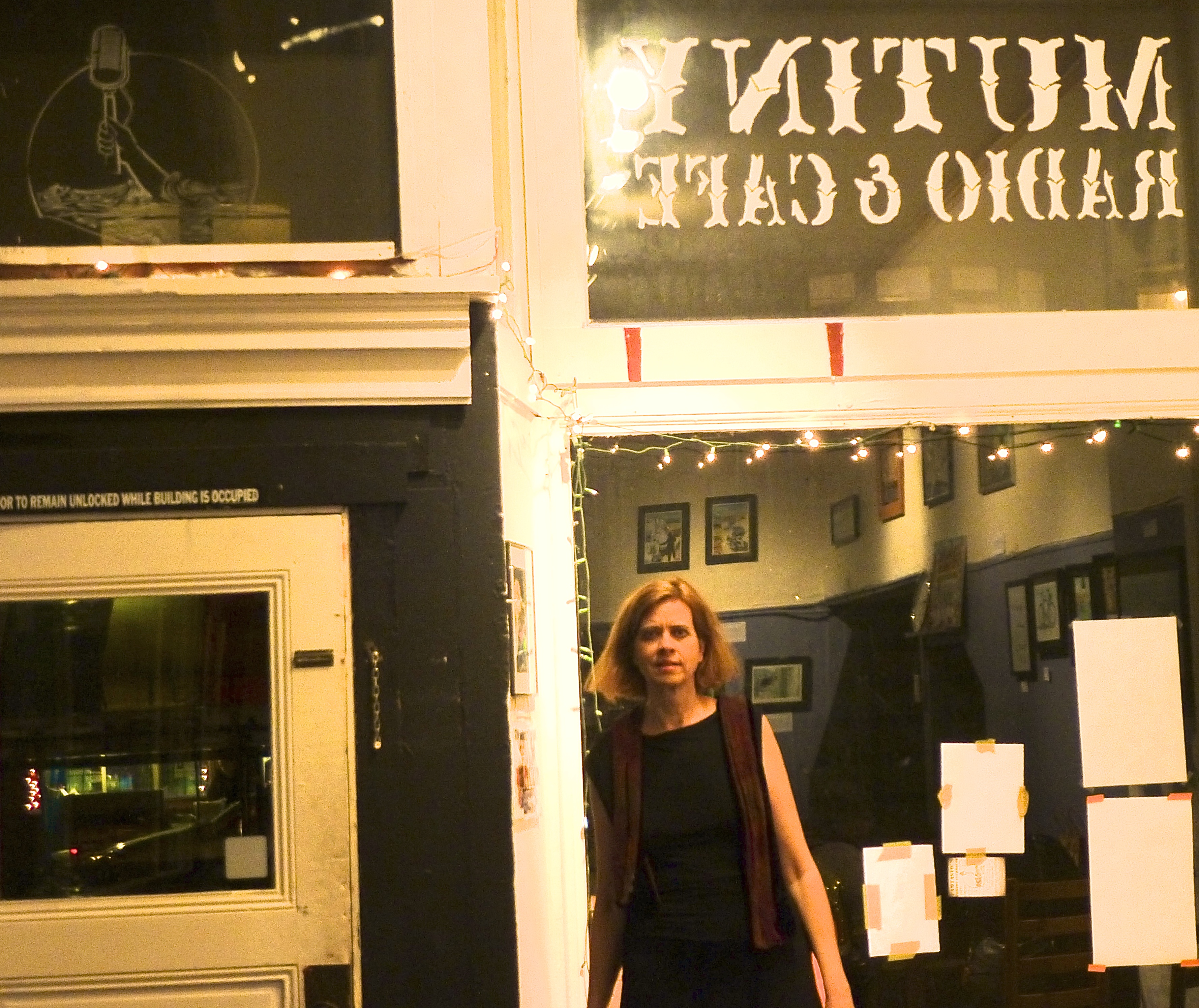
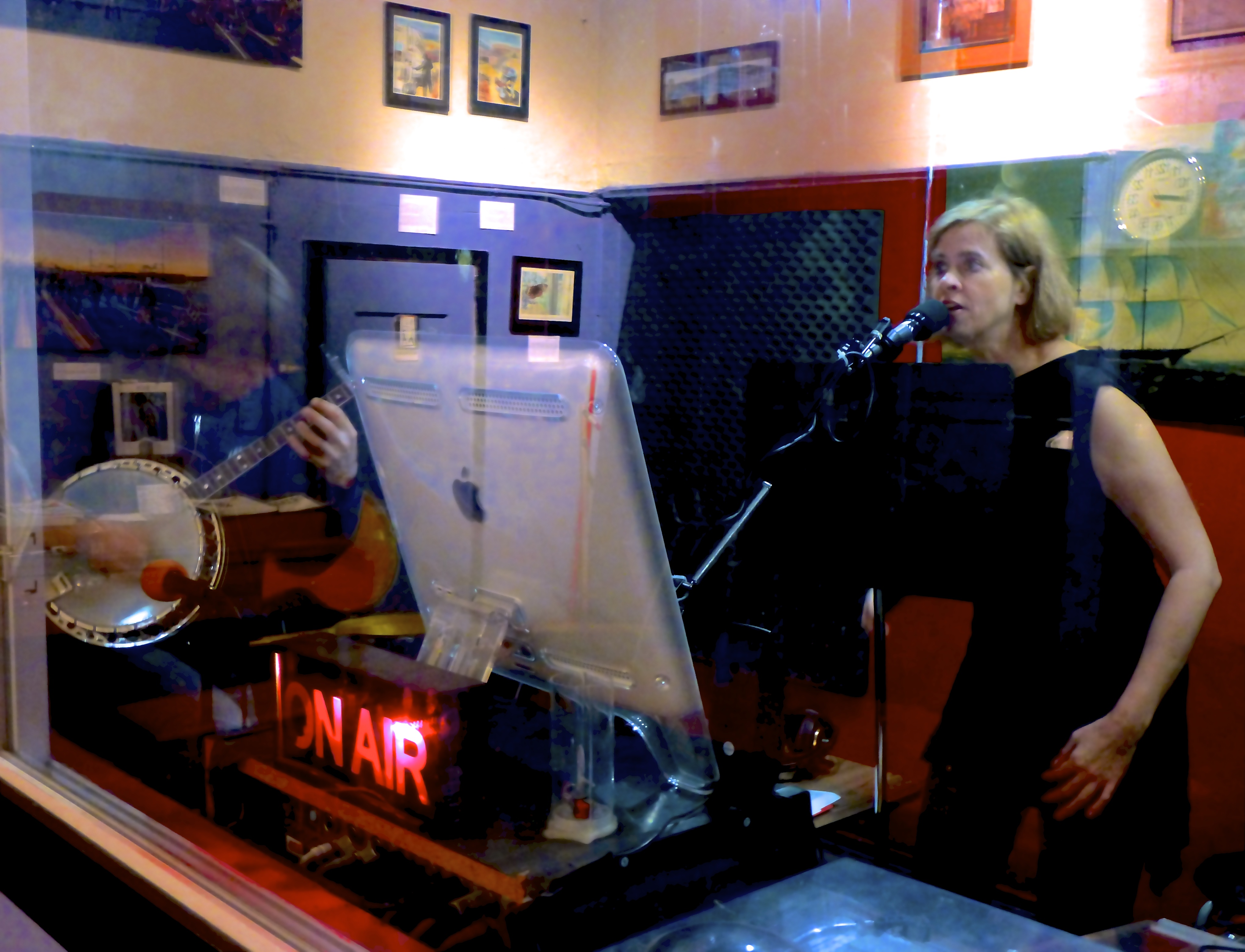
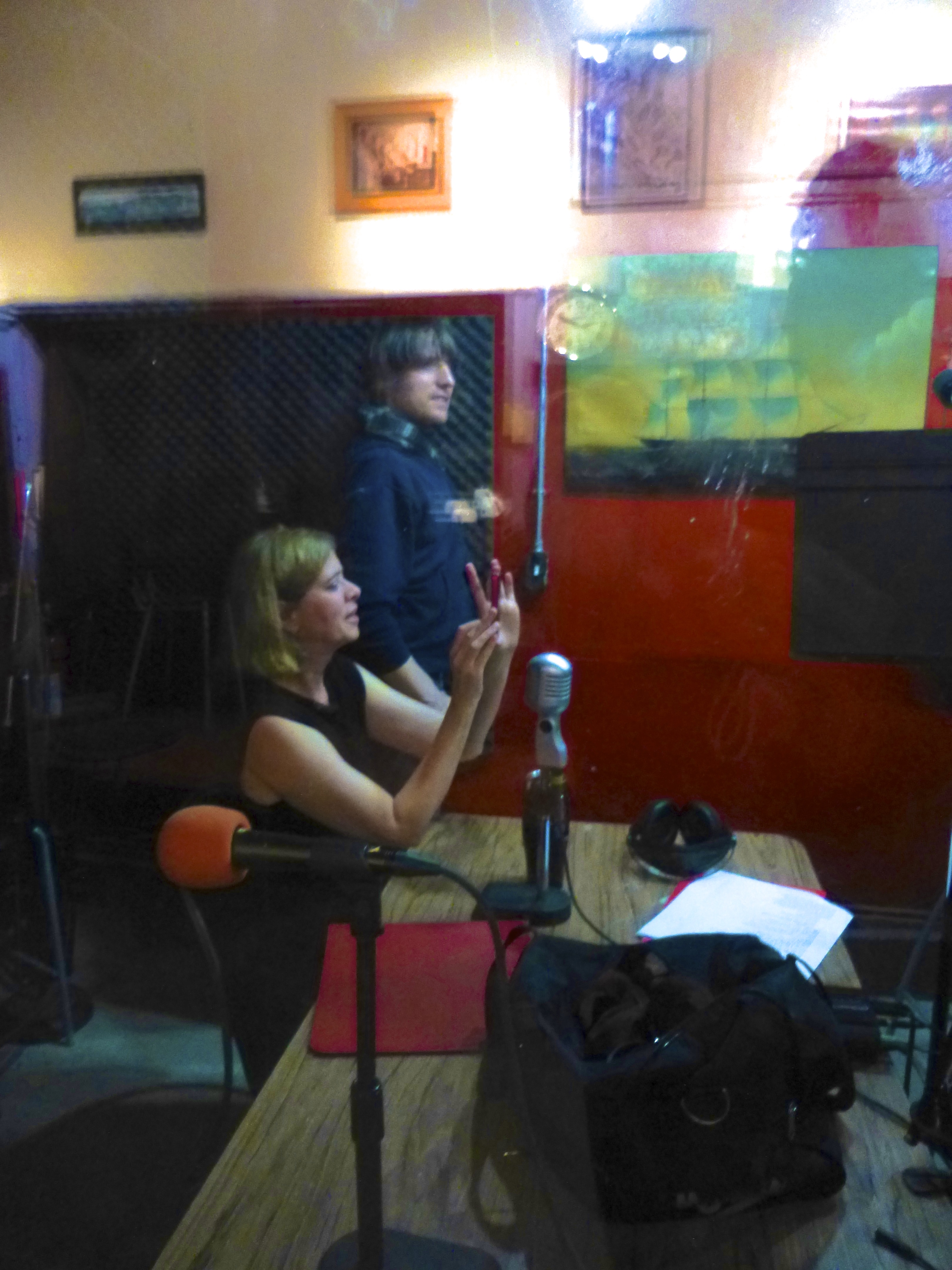
Kathleen Live On Mutiny Radio!

What fun! Just came home from doing a live show on Mutiny Radio of my original songs performed by me and my Better Devil guitarist, friend and producer Gawain Mathews, and I give an interview about where these songs come from and how I write ’em! Thanks Aisha and Crystal for having us on your program Sounds from the Street. You can hear the show too! Here’s the link BUT you have to
FORWARD TO BEGIN at 42:49
(about 1/3 of the way into it):  Podcast

P1000340

P1000346

IMG_2902

IMG_2910

P1000349_2

IMG_2898 - Version 5

IMG_2904Photos by Kathleen Dunbar and Lorene Garrett

Kathleen Dunbar on Mutiny Radio Saturday Nite!

This Saturday Nite, February 9, TUNE IN–I’m on Mutiny Radio 8:30-9:00 pm with my Better Devil guitarist, producer and friend Gawain Mathews for an interview and we’ll play some live songs on the radio for You! Thanks to Aisha for hosting us in her “Sounds from the Street” program!
Here’s the link 
BUT you have to
FORWARD TO BEGIN at 42:49
(about 1/3 of the way into it):  Podcast
AAA Best Band Lg 985874437_yyETT-LFrom my song 
Everybody Knows

The Delaware brothah
he done axed me
tall and fine
he relaxed me.
We took it crosstown
we took it slow
we found it comin
and we found it on the go.
He had a halo
it was ten percent
he didn’t know
where the other ninety went.
He said I give it to you girl
you give it back to me
the train done left the station
and the ride ain’t free.
Look for an exit
hope for a sign
don’t hurt my gunarm
my aim is fine.
If the waitress likes you
your coffee’s free
she calls you honey
her honeybee!

Photo by Tamarind Free Jones live at The Uptown in Oakland
To listen to Everybody Knows click this: Bandcamp
Find me on my music website www.kathleendunbarmusic.com

Wolves In The Bathtub

IMG_2797

wolves in the bathtub

email to: melissa (the cleaning lady)
from: kathleen (the broken hearted)
re: cleaning news

hi melissa,

no more owen, I
cried buckets
he got scared of
closeness
and receiving love
(no kidding!)
and ran away
“a lone wolf”
says he
no word since!

how crummy that
our families
with all their sloshing
fear and anger
can leave such a scum
upon the fine porcelain
of our love
that some of us
never fill again
our aching hearts
but move out
and on
and never in

as you know
my bathtub is old
and the porcelain’s shine
is compromised
but it is deep, deep
and I love it
it has sure feet
and welcomes me
and it is enough that
it is attended to
and clean
and in fact
I prefer character
over five-star-shiny
if the price for spotlessness be
no contact
with the psyche’s
deeps

now about my shower
as you know
it stands separately
in its own enclosed space
too dark to easily
shave my legs
probably designed
by someone
who did not like to
let light in
dark places…

the upshot—
please clean the ceiling of the shower
as there is no more owen
with his tallness
and helpfulness in the event
of safe disasters
(ie mold on the shower ceiling
as opposed to
the breaking open of a heart—
the patience and kindness
needed by two people
to share the insane pain
of the first real reaching up
into love
past the grim hurting stains
left by our families
and after that, all the attendant
care and maintenance
needed to continue
to be vulnerable,
divine and ordinary,
cleansed—enough—of
growing up
to enter the waters
with one another)…

the stool for you to
get to that height
is as always
and commitedly so
in the hall closet

I wish for owen
somewhere
howling inwardly
and alone
for him to put his wolfpaw
upon his heart
till it turns into the
hand of a man
and find some glimmer
that will allow him
to make real contact
with himself and others
to know he is
good enough
and to learn someday
that the wolf
after all
is really a tribal
not a lone creature!

my weeping was loud
while in the tub
it has left traces
you will not see
but I’m okay

I pray for
a wolf of the tribes
to come running into the bath someday
to jump in the waters with me
and become human
and go deep
and tribal
and down
and anyway
if not, or until then,
my heart is large
and fine
and open,
scrubbed enough
to be serviceable
recognizable
and quite able
(though it be joy or sadness)
to be filled
to the
brim

I wish the
same for
him.

*sigh*
kd

© Kathleen Dunbar

Photo by Kathleen Dunbar

Would ya like to hear one of my love songs?  Just click on the title to take you to the song: Accordion Song  Or visit my website and find it: kathleendunbarmusic

LEAVE A COMMENT!  Just click the little “bubble” at the top to the right of the title, or use the space provided below.

My song Sweet Carline Voted in February’s Top Ten on Ourstage!

IMG_2758
YEAH! My song Sweet Carline was just voted into the Top Ten for January 2013 in its category on Ourstage! What a great start to the new year! Thanks lovely voters! Go directly to this link to listen on Bandcamp.  It’s on my new CD The Storm in Our Head. Fun behind-the-scenes trivia–You can see the chart for Sweet Carline by my evercool producer and guitarist Gawain Mathews in my first-ever blog post by clickin’ Chart.

LEAVE A COMMENT!  Just click the little “bubble” at the top to the right of the title, or use the space provided below.

Photo by Kathleen Dunbar

The First Time I Saw “The Good, The Bad and The Ugly”

A-Cowgirl in Red  I remember the first time I saw The Good, The Bad and The Ugly. My mom had gone down to FLA for my grandfather’s funeral. Me and Dad were left to duel it out in the house (I was a teenager and my Dad a general foreman at a factory that made truck axles. His refrain, “How come I can boss around 300 men and not you two women!”) Dad had sometime stints of wandering around in his underwear, an off-white ensemble of not-so-tightie-whities and what he called an “undershirt” and that I later learned people are wont to call “wifebeaters”—skinny straps and kind of ribbed cloth. So with this outfit of course he cranked the heat up to keep him warm with Ohio snows outside.

But mom was gone and he was alone with his teenager daughter—time to let her know who was Boss. He turned the thermostat down, put on a lot of layers and gave me a tough-guy stare to let me know, “This town is only big enough for one of us.” I should say that he used to practice making scary faces in the bathroom mirror to intimidate the men under him at the factory, but I’d one time caught him practicing. I was about six, and peered through the partly open door to find him standing puff-chested, trying out different glowers and frowns in the mirror to polish them up. As he would make a face I’d mirror him, screwing up my fresh young brow into a scowl until he caught me: He scowled, I scowled. “Little girls don’t do that. Stop it.” To which I replied with the child’s perennially sageful question, “Why?” “Because I said so”—that four-word recipe for your kid to start losing respect in you.

After many years of “Because I said so’s” Mom was in Florida and with the furnace on low pretty soon the winter ice tried to push in through the windows and sit down on the couch. This was crazy! Of course I cranked the heat back up. He stomped into the hallway and turned it down. I long-leggedly drifted by and notched it up. He announced that he was the Father and cranked it down. I announced that I was the Daughter and was freezing. Up and down it went. And of course he hollered and of course I dug in. And the whole fight mighta gone south (that’s a story for another day) except for the family truce device:

A movie was coming on, a Western for chrisakes, that we’d found in the TV Guide. There was only one color TV in the house, thus enforced proximity. Now, watching a Western was the only time that my family actually sat down together and had a good time, be it movie or weekly series, often accompanied by a tin roof sundae with walnuts or Spanish redskin peanuts, and I got to stay up late to see the end if it ran long. I’m not really sure why this was, but it, well, was—any together-time-port in a storm kind of thing. Tonight, however, instead of the usual John Wayne hard jaw, thank you m’am, you’re either on one side or t’other, for ‘em or agin ‘em, an entirely different kind of movie came on in the back bedroom where teenage Kathleen and her Pop had truced it up with a Western and a sundae, a movie that changed my life:

A blonde stranger in a black hat chewed a little cigar, took aim and shot clean through the hangin’ noose rope setting free a hardened little rat of a man (Tuco means rat) whom you could not help but like. The stranger kept the reward he’d collected for this Wanted Man all for himself—he didn’t split it with Tuco per their usual scam, but he didn’t let Tuco hang either. He made him walk through the desert and Tuco eventually evens things up and the pale stranger must make his own sunburned walk….But Tuco turns out to be more honest than his pious cowardly priest brother, and Blondie is strangely and refreshingly (for a Western in that era) three-dimensional, which means a stiff drink of plenty of badassness and a generous helping of self serving along with the occasional good impulse. The Bad Guy by his through-and-through evil is a foil for The Good and The Ugly’s complexity. I was captured for life.

But, I was in Ohio with a sometimes only-underwear-wearing WWII veteran dad who told me he was King (he actually said this). Oh take me to that great western desert……

Leone’s story unfolds, of course, in the wonderfully hellish heats of a Landscape without which this movie would not happen. Now in certain kinds of stories, the land itself is a character in the story. In the Western this is often the case. The Good, The Bad and The Ugly was shot in Italy, yeah, but the archetype of the land speaks beyond the borders of countries. The landscape of the Western is heroic—and by heroic I mean that beautiful, deadly, otherworldly territory through which Everyman must pass on a Quest, in this case the Desert:
the sky so wide it can hold two storms at once
blue sky between them because it can
and endless stretches of
no rain, no water, only sand
dead bone dry
no whiskey left dry
aching heart dry
greedy white man dry
and poured into this extreme landscape the age-old collection of forces that each and every one of us has inside, no exception, doesn’t matter if they dress like a Cowboy, a Native, or a New Yorker. In all compelling stories we meet ourselves, all of ourselves, whether we like it or not: Hero, Maiden, Whore, Fool, Seeker, Prophet, Greedy Bastard, Wise Man, Healer, Bad Guy. For the story to be interesting and worth something the characters are complex and mixed in is a dose of humor and a good musical score. That teenager that I was didn’t know that many years later I’d walk down a nighttime San Francisco street singing out loud “Oo-ee-oo-ee-ooo…” and immediately get the iconic response to the call from a darkened doorway, “…Wah-waah-wah.” Nor did I know that I’d sit in the Castro Theater for the long-awaited rescreening of the movie complete with never-before-seen Italian version scenes, the house sold out by hardcore fans!

My dad died pretty young, 64 (which seems younger the older I get) when I was in Wales on my junior year abroad. We’d been fighting long distance but for some odd reason I called home, he answered and neither of us worried for once about the long-distance bill (which would be hefty) and we had an incredibly and unusually good connecting conversation a couple weeks before he died: After mowing the lawn he sat down on the back porch and his heart gave out.

I can say in truth that my dad was a real bastard. He actually told me he’d rather have a different daughter, and I’ve spent a ton of money in my life on therapy; and I’ve had the kind of pain one has in choosing not the greatest boyfriends cuz I had an oddball template from my old man. He told me women shouldn’t vote or wear pants! He meant it! However, I went on to do both things in my own Heroine’s Quest which I set out upon from the hardscrabble territory of Dad- and Mom-land. My Dad, a compli-fuckin-cated guy coming from that kind of gray area which makes life so damnably, uncomfortably, tormentingly…interesting! (At least if you can make it through the desert, which I did, though not without second thoughts—also a story for another day).

I went on to find my own unique strength and learned to do things my own way—that is a short way of saying how I made sense of a lot of craziness growing up. What I’ll leave you with is a tale of the old West that I’ve written from my own woman’s-view of the Western: a song I call Red Bird on my new CD, The Storm in Our Head (hear it for free in the link you’ll find at the end of this paragraph). Here’s a big nod to Sergio Leone, Clint, Eli and the gang for doing their thing differently than the previous gang, and for showing up in a refreshingly compelling story in a snowbound Ohio house where me and my Dad forged some kind of bond—not the kind where a father gives his daughter confidence in herself, and so small as to highlight the grief that there wasn’t more, but a little something human, complicated, heartbreaking. To be continued… © Kathleen Dunbar 2013

LEAVE A COMMENT!  Just click the little “bubble” at the top to the right of the title!

Photos by Kathleen Dunbar

Easiest way to listen quick to Red Bird is via Bandcamp
Via My Webpage (it’s track 15, towards the bottom) 
Via Itunes (it’s track 15, towards the bottom)
Via CDBaby (it’s track 15, towards the bottom)

A-White Mnts via Dutch Pete's Ranch

Fab Review Just In for my album The Storm in Our Head

545721_3973036163825_1814285429_n_2_2Music Emissions Review:  Listening to Ohio raised San Francisco based Kathleen Dunbar’s latest album, The Storm in Our Head recently has just renewed my appreciation for story-telling songs. It’s rare nowadays to come across a catalog that connects several generations of music and harkens back to a gamut of genres- bluegrass, Americana, blues, folk songs from the “olde country” (where ever that is in your head) and even Latin jazz.

Before e-books, readers, laptops and even written word, this album reminds the listener, songs were what we had and really all we needed to pass along tales of love, forlorn loss, morality and hidden life metaphors. A theatrical poetess emerges from the first note to take the listener’s hand on an interesting character journey. What happens to the heroine when “a superhero can’t stop the wreck?”

Displaying pieces of Joni Mitchell, Bonnie Raitt, Alannah Myles, June Carter and Carole King, the tempo rides several raucous hills and quiet valleys from hand-clapping, knee-slapping, 60’s twisting, 70’s classic rock to a slow Tennessee waltz. A dichotomous Black Magic Woman/“Sweet Carline“/”Snake Charmer and wounded, bruised victim that will take the hit (“this is the part where I get a broken heart”) but will triumphantly rebound. Straying from the others, “Blue Tattoo” was an unexpected “smoky club, gardenia in hair” surprise in the Latin bossa nova vein. The contrasting genres mix beautifully to form a potent eye of the “storm” to which you’ll gladly be swept.  Jan 14, 2013 

Photo by Joseph Feusi

Listen to the album by visiting Itunes, my Website or Bandcamp

See review at Music Emissions

“I Knew A Girl” by Kathleen Dunbar

I just released this video today! Me singin’ my original song, Gawain Mathews on banjo and backing vocals, Drew Southern the videographer, and the field: Sonoma at dawn! You can see that the sun’s coming up during the video.